
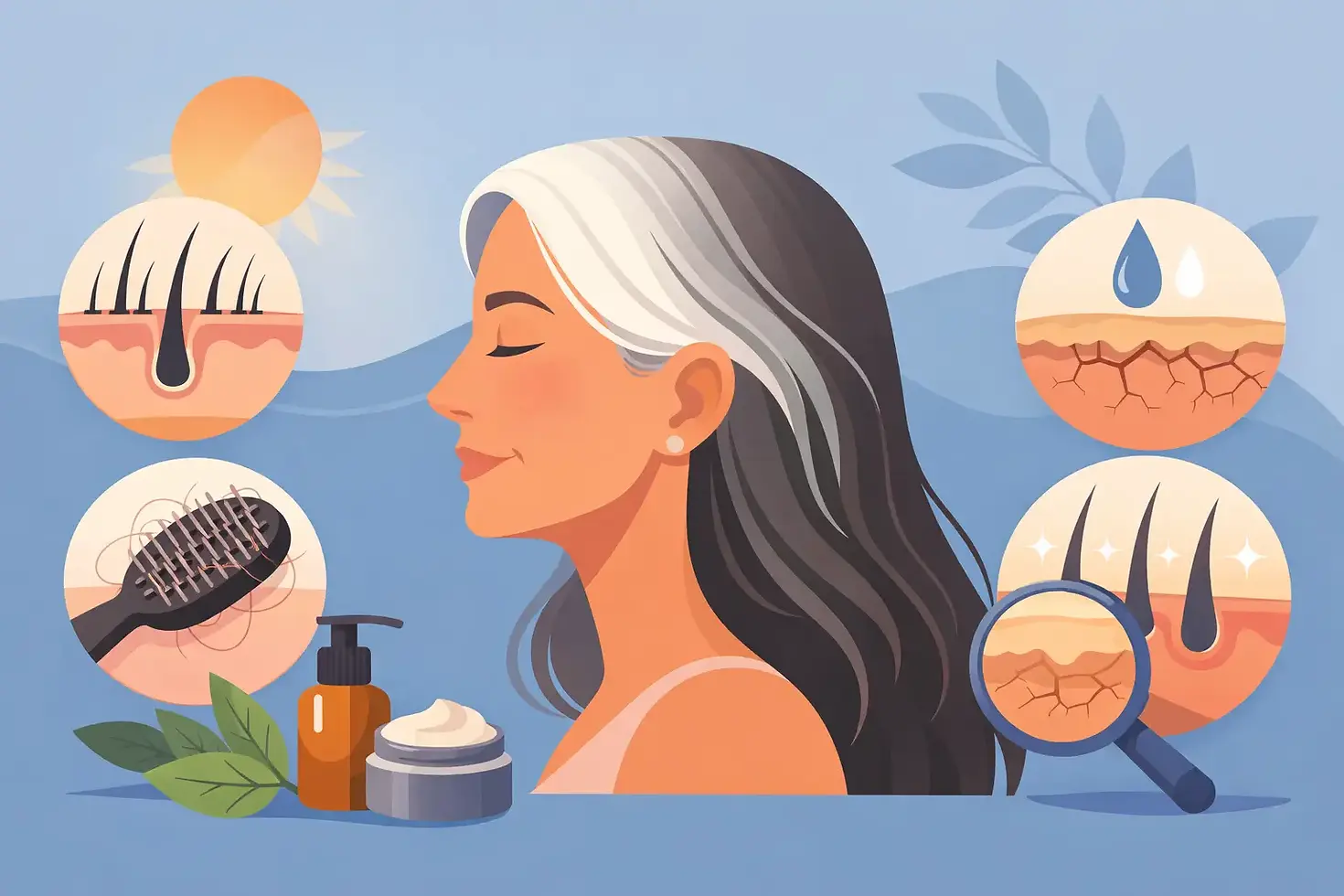
Menopause Hair Changes and What Your Scalp Needs
A widening part. More hair in the shower. Edges that suddenly feel less full, even though your routine has not changed. Menopause hair changes are real, common, and often deeply frustrating, particularly when you have spent years learning exactly what your textured hair needs.
This is not a sign that you have failed at hair care. It is a signal that your hair and scalp may need a different level of support. During perimenopause and menopause, hormone shifts can affect density, growth patterns, moisture retention, and the way each strand behaves. The right response is not to buy every product promising growth. It is to understand what has changed, assess the scalp, and build a restoration plan around your hair's current needs.
Why Menopause Hair Changes Happen
Estrogen helps support the hair growth cycle. As estrogen levels decline, the relative influence of androgens can increase. For some women, that shift shortens the active growth phase and makes follicles more likely to produce finer, shorter strands over time.
The result may look like diffuse thinning through the crown and part, slower growth, or a ponytail that feels noticeably smaller. Some women also see more recession at the temples or thinning around the hairline. While menopause is often part of the picture, it should not automatically be blamed for every change. Thyroid concerns, iron deficiency, low vitamin D, rapid weight changes, certain medications, and chronic stress can also contribute to shedding and hair loss.
For textured hair, the experience can feel especially complex. A strand may become drier and more fragile at the same time that density decreases. That combination can create the appearance of even more thinning because breakage removes the length and fullness that once gave the style its shape.
The Changes You May Notice First
Menopausal hair changes do not follow one pattern. One woman may experience shedding that feels sudden. Another may notice that her silk press no longer holds the same movement, her curls feel less defined, or her scalp becomes more visible under certain lighting.
Reduced Density and a Wider Part
A broader part is one of the most common visual changes. Hair may seem thinner at the crown, top, or sides, even if the hairline still appears intact. This can progress gradually, which is why comparison photos and a close scalp assessment can be more useful than relying on memory alone.
Dryness, Roughness, and Loss of Elasticity
Hormonal changes can affect the scalp's oil production and the hair fiber's ability to retain moisture. Hair that was once easy to detangle may feel rougher, duller, or more resistant to styling. More moisture is not always the complete answer, however. If the hair is repeatedly heat-styled, chemically processed, or weakened by tension, it may also need strategic strengthening and gentler handling.
Breakage That Looks Like Slow Growth
Many clients say their hair "will not grow" during this season. In some cases, the follicles are growing hair, but the mid-lengths and ends are breaking before length can be retained. Fine new growth, increased dryness, frequent manipulation, and high heat can create a cycle that makes progress difficult to see.
A More Sensitive or Uncomfortable Scalp
An itchy, tight, flaky, tender, or unusually oily scalp deserves attention. Product buildup and inflammation can interfere with a healthy environment for growth. A sensitive scalp is not something to cover up with heavier oils or styles that create more tension. It needs a closer look.
What Not to Do When Your Hair Starts Changing
When density shifts, it is understandable to reach for tighter styles, heavier extensions, frequent edge control, or aggressive brushing to make hair appear fuller. These choices may offer a temporary cosmetic fix, but they can place additional stress on already vulnerable strands and follicles.
Be cautious with routines built around constant product switching, too. Growth oils, supplements, and viral treatments may sound promising, but they cannot correct every cause of thinning. Some oils can worsen buildup or scalp irritation, and supplements are not automatically beneficial when a deficiency has not been identified.
The same goes for excessive protein. Strengthening treatments can be helpful for compromised hair, but overuse may leave some hair feeling stiff and more prone to snapping. Restoration works best when moisture, strength, scalp health, and styling practices are addressed together rather than treated as separate problems.
A Scalp-First Plan for Healthier Growth
The most effective care begins with clarity. Before changing your entire routine, identify whether you are dealing primarily with shedding, miniaturization, breakage, inflammation, traction, or a combination of concerns. These issues can look similar in the mirror, but they require different decisions.
Start With a Personalized Assessment
A detailed scalp and hair analysis can reveal concerns that are easy to miss at home: clogged follicles, inflammation, fragile regrowth, tension patterns around the hairline, or uneven density through the crown. This is where clinical-informed care matters. Styling should complement your restoration plan, not compete with it.
At BCSxHaircare, a customized approach considers your scalp condition, density goals, texture, styling habits, and the realities of your lifestyle. The goal is visible progress that protects the health of the hair underneath, not a one-day style that asks your scalp to carry too much.
Cleanse for the Scalp You Have Now
Menopause may change what your scalp tolerates. If you are experiencing buildup, itching, or flaking, regular and thorough cleansing becomes essential. If your scalp is dry or sensitive, choose techniques and products that cleanse without leaving it stripped.
Focus your shampoo application on the scalp and allow the lather to move through the lengths. Follow with conditioning that supports slip and softness, especially on areas prone to tangling. The right frequency depends on your scalp condition, activity level, and styling choices. A scalp that is irritated or congested may need a different cadence than one that is simply dry.
Protect Fine, Fragile Hair From Daily Stress
Small changes can preserve more hair than another miracle product. Reduce tight ponytails, heavy extension installs, and styles that pull at the edges. Detangle patiently with adequate conditioner or a detangling product, beginning at the ends. Use heat intentionally, with heat protection and settings appropriate for the hair's condition.
If you wear your hair straight, a smooth silk press or blowout can still be part of your routine. The difference is technique, frequency, and maintenance. Hair that is becoming finer may not tolerate repeated high heat the way it once did. A healthy style plan should be flexible enough to protect your progress between appointments.
Support the Whole Picture
Hair can reflect what is happening beyond the bathroom. Prioritize consistent meals with adequate protein, hydration, sleep, and stress support where possible. If shedding is persistent, sudden, or significant, ask your medical provider about relevant testing and whether a dermatologist should be involved.
Seek medical evaluation promptly if you notice bald patches, scalp pain, burning, scaling, scarring, or rapid hair loss. Those signs may point to a condition that requires medical diagnosis and treatment alongside restorative salon care.
When Results Take Time, Your Plan Matters More
Hair restoration is rarely immediate. Shedding can take several months to settle after a trigger, and new growth needs time to become visible and long enough to contribute to fullness. That timeline can feel discouraging, especially when you want to look polished for work, events, and everyday life.
A thoughtful plan gives you something better than guesswork: measurable checkpoints. Photos of the part and hairline, notes about shedding, scalp comfort, breakage, and length retention can show changes that are difficult to see day to day. Adjustments should be based on what your scalp and hair are actually doing, not on promises printed on a bottle.
Menopause may change your hair, but it does not take away your ability to care for it beautifully. Give your scalp the same attention you give your style, and let your routine become a form of restoration - one that supports confidence, comfort, and healthier growth over time.


Comments