

Seborrheic Dermatitis Treatment for a Healthy Scalp

Flakes on your shoulders after a fresh silk press are frustrating. A tight, itchy scalp beneath braids or a sew-in can feel even worse. When the cycle keeps returning, seborrheic dermatitis treatment should go beyond trying another oil or covering the scalp with more product. The goal is to calm inflammation, reduce buildup, and protect the hair that is trying to grow.
Seborrheic dermatitis is common, but it can be especially disruptive for women with textured hair. Haircare routines are often designed around moisture retention, protective styling, and less frequent shampooing. Those practices can support healthy strands, yet a scalp experiencing dermatitis may need a different balance. More moisture on the hair does not always mean more oil on the scalp.
What Seborrheic Dermatitis Can Look Like
Seborrheic dermatitis is an inflammatory scalp condition associated with an overgrowth of naturally occurring yeast, excess oil, and an individual skin response. It can show up as white, yellowish, or gray flakes; itchiness; tenderness; redness; scale; or a waxy buildup that does not lift with a typical wash day.
On deeper skin tones, redness may not be obvious. Instead, the scalp can look darker, ashy, irritated, or uneven in areas around the hairline, crown, or behind the ears. Some women notice a recurring odor or a scalp that feels coated shortly after cleansing.
The condition is not caused by poor hygiene. It is also not always dandruff, even though the two are often confused. Dandruff is generally milder flaking, while seborrheic dermatitis may involve more visible inflammation and persistent scale. Psoriasis, eczema, contact dermatitis, fungal infections, and product reactions can look similar, which is why an informed scalp assessment matters.
Why Textured Hair Needs a Different Treatment Strategy
A scalp can become irritated when heavy butters, oils, edge products, dry shampoo, sweat, and styling residue accumulate over time. This does not mean textured hair should be stripped or handled aggressively. It means the scalp and the hair need separate care plans.
For example, applying oil directly to a flaky scalp may temporarily soften visible scale, but it may also worsen the environment that allows seborrheic dermatitis to thrive. Scratching with nails, picking at scale, or using harsh exfoliants can create micro-injury, increase inflammation, and contribute to breakage around fragile areas.
There is also a styling trade-off. Wearing a protective style may reduce daily manipulation, but if the scalp is already itchy, inflamed, or heavily coated, a long-wear installation can make it harder to cleanse and monitor the condition. Tight tension can add another layer of stress, particularly at the edges and nape where thinning is already a concern.
Seborrheic Dermatitis Treatment Starts With Scalp Control
Effective seborrheic dermatitis treatment is usually consistent rather than dramatic. It often includes a medicated shampoo, a cleansing schedule that matches your scalp condition, and adjustments to the products and styling habits that may be feeding buildup.
Medicated shampoos may contain active ingredients such as ketoconazole, selenium sulfide, zinc pyrithione, salicylic acid, coal tar, or sulfur. Each works differently. Antifungal options can help reduce yeast activity, while keratolytic ingredients such as salicylic acid help loosen scale. The right option depends on your symptoms, skin sensitivity, color-treated hair, and whether you are dealing with active inflammation or mainly buildup.
Use medicated shampoo as directed on the scalp, not simply over the lengths of the hair. Give it adequate contact time before rinsing so the active ingredient can work. Then follow with a hydrating conditioner on the mid-lengths and ends, where textured hair needs softness and slip. A scalp-focused cleanse does not have to mean dry, hard, unmanageable hair.
During a flare, more frequent washing may be necessary than your usual routine. Once symptoms are controlled, many people can shift into a maintenance schedule. This is where personalized guidance is valuable. Cleansing too infrequently can allow scale and oil to build up, while cleansing too aggressively can leave the scalp irritated and the hair dry.
What to Pause During a Flare
Temporarily simplify your routine. Avoid piling multiple oils, scalp greases, fragranced sprays, and thick creams directly onto an inflamed scalp. Skip DIY treatments that sting, including undiluted essential oils, vinegar mixtures, or abrasive scrubs. Relief should not come at the cost of further irritation.
It can also help to loosen the timeline around a new installation, retightening appointment, or high-heat service if your scalp is visibly irritated. Healthy styling begins with a scalp that can tolerate the service comfortably.
Protecting Hair Growth While Your Scalp Heals
Seborrheic dermatitis does not automatically cause permanent hair loss. However, ongoing inflammation, scratching, shedding, and breakage can make density concerns more noticeable. For women already managing thinning edges, traction, postpartum shedding, or fragile strands, ignoring scalp symptoms can make progress harder to see.
The priority is to stop the inflammatory cycle before focusing on length retention. Keep detangling gentle, avoid scratching with combs or nails, and do not force dense scale from the scalp. If hair is shedding in patches, the scalp is painful, there are pustules or oozing, or symptoms are not improving with appropriate over-the-counter care, see a dermatologist promptly. Prescription antifungal, anti-inflammatory, or other treatments may be needed.
A trichology-informed scalp evaluation can also help identify patterns that are easy to miss at home. Product buildup, scalp dehydration, tension, inconsistent cleansing, and overlapping hair-loss conditions can coexist. Treating only the flakes without addressing the full scalp environment may lead to short-term relief and repeated frustration.
Creating a Maintenance Routine That Fits Real Life
The best routine is one you can maintain between appointments, workouts, travel, and busy workweeks. Start by identifying what changes before a flare: a new styling product, delayed wash day, seasonal weather, stress, sweat under a wig, or a tighter protective style. Those details can reveal the trigger pattern.
Keep your cleansing steps purposeful. Cleanse the scalp thoroughly, condition the hair generously, and apply leave-in products primarily to the hair shaft instead of coating the scalp. If you wear wigs, extensions, or braids, make a plan for accessible scalp cleansing and avoid installing over active inflammation. Protective styling should protect, not conceal a condition that needs care.
Consistency matters more than buying a cabinet full of products. A carefully selected treatment shampoo, proper technique, and a realistic schedule often do more for the scalp than rotating through every trending remedy.
When Personalized Care Makes the Difference
You deserve more than a temporary fix that leaves your hair dry or your scalp uncomfortable again two weeks later. The right plan considers the visible symptoms, your styling preferences, the health of your strands, and the history behind your shedding or breakage.
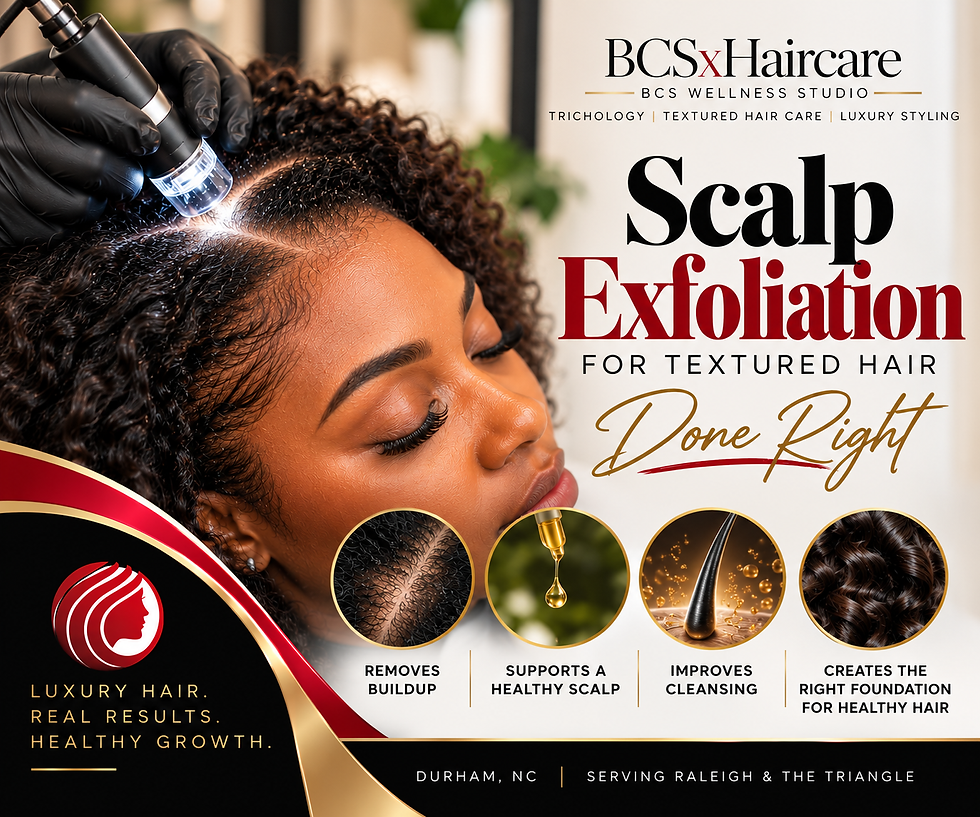
At BCSxHaircare, scalp restoration is approached as part of the full hair journey, not an afterthought before styling. A detailed assessment can help clarify whether your flaking is consistent with seborrheic dermatitis, buildup, sensitivity, or another concern requiring medical referral. From there, care can be tailored to support a calmer scalp, stronger strands, and styles that feel as good as they look.
Your scalp is the foundation for every healthy-hair goal. Give it the same intentional care you give your color, cut, and style - because real restoration starts at the root.


Comments