

Menopause Hair Loss: What Your Scalp Needs Now
A wider part, thinner temples, more hair in the shower, or a ponytail that suddenly feels smaller can be unsettling. Menopause hair loss is common, but that does not make it something you have to dismiss, hide, or manage with another random product. Your hair is responding to changes in the body, and the right next step begins with understanding what those changes may be.
For women with textured hair, the concern can feel especially layered. You may be managing dryness, breakage, protective styling, heat history, and scalp sensitivity at the same time your hormones are shifting. The goal is not simply to make thinning hair look fuller for a day. It is to protect the hair you have, support a healthier scalp environment, and create a realistic plan for visible progress.
Why Menopause Hair Loss Can Feel So Sudden
Estrogen supports many systems in the body, including the hair growth cycle. As estrogen levels decline during perimenopause and menopause, the relative effect of androgens can become more noticeable. For some women, this contributes to a gradual shortening of the growth phase and a longer resting phase, which means hairs may shed before they reach their usual length or thickness.
The result is often diffuse thinning across the crown, a widening part, reduced density around the hairline, or less volume through the lengths. Unlike a single bald patch, hormonal thinning can be subtle at first. You may notice it most in photos, under bright bathroom lighting, or when your usual style no longer falls the same way.
Menopause can also coincide with other pressures that affect growth. Sleep disruption, stress, weight changes, nutrient deficiencies, thyroid conditions, illness, medication changes, and chronic inflammation can all contribute to increased shedding. That is why guessing is expensive. A scalp and hair assessment helps distinguish between breakage, shedding from the root, pattern thinning, and conditions that need medical evaluation.
Menopause Hair Loss Is Not Always Just Hormonal
Hormonal changes may be part of the picture, but they are not automatically the whole story. Hair that is snapping along the strand needs a different approach than hair that is releasing from the follicle. A thinning hairline related to traction needs different support than a widening part associated with female pattern hair loss.
Textured hair can make this distinction harder to see. Coily and curly hair naturally holds shed strands within the style, so wash day may reveal what appears to be dramatic shedding all at once. At the same time, dryness and weakened elasticity can lead to breakage that looks like hair loss from a distance.
Pay attention to what you are seeing. Full-length strands with a small white bulb at one end usually indicate shedding from the root. Short, uneven pieces without a bulb are more likely breakage. Tenderness, itching, flakes, burning, shiny areas of scalp, or rapidly changing density deserve prompt professional attention. These signs can point to inflammation or a scalp condition that should not be covered up with oils and styling products.
What a Restoration Plan Should Address
A meaningful plan for menopause-related thinning should be personalized, not based on a one-size-fits-all routine. It starts with a close look at your scalp, density pattern, hair fiber strength, styling habits, product buildup, and health history. That process creates a clearer answer to the question every frustrated woman is asking: Why is this happening to my hair?
Scalp health comes first
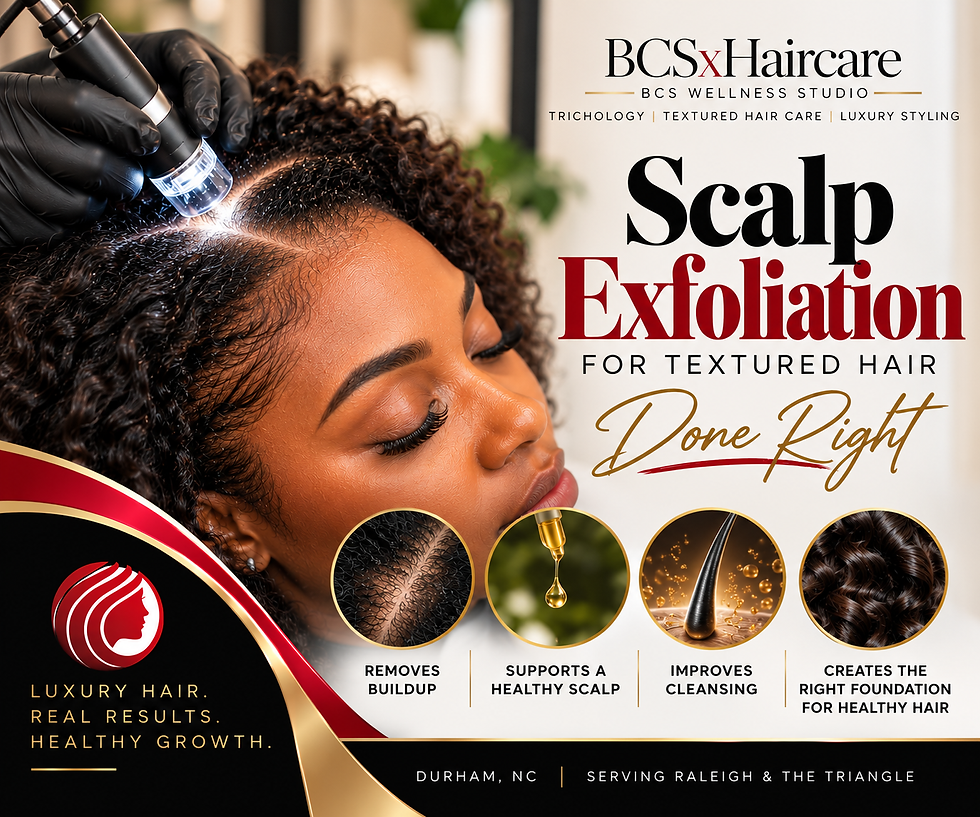
Healthy growth needs a scalp that is clean, balanced, and free from unnecessary irritation. Heavy buildup, inflammation, excess dryness, and clogged follicles can interfere with comfort and make it harder to maintain consistent care. Targeted cleansing and scalp treatments can help create a better environment for the hair that is still actively growing.
This does not mean stripping your hair or treating every concern with the same scalp oil. In some cases, oils can be useful for the hair fiber. In other cases, applying them heavily to an irritated or congested scalp can make the situation worse. Your scalp needs to be treated according to its condition, not a trend.
Retention protects the density you still have
When density changes, every strand matters. Aggressive detangling, frequent high heat, tight braids, sew-ins, ponytails, and adhesives can add avoidable stress to already vulnerable hair. This is particularly relevant at the temples and edges, where traction-related thinning can overlap with hormonal changes.
Protective styling should feel protective. It should not cause pain, tension bumps, scalp tenderness, or a pulling sensation that lasts for days. A refined style can still be low tension, polished, and aligned with your lifestyle. The best choice depends on your current density, scalp condition, and how much daily manipulation your hair can tolerate.
Treatment needs consistency, not urgency
Many women respond to shedding with a crowded cabinet of supplements, serums, oils, and vitamins. The problem is not a lack of effort. It is that too many changes at once make it difficult to identify what is helping, what is irritating the scalp, and what is simply adding cost.
Some women may benefit from medical treatments such as topical minoxidil, but it is not right for everyone and should be discussed with a qualified healthcare professional. It can cause an initial shedding period, and stopping treatment may reverse gains. Hormone therapy, iron support, thyroid treatment, and prescription options are also decisions for a medical provider based on your personal history.
A hair restoration specialist can support the cosmetic and scalp-health side of your plan while helping you recognize when a dermatologist, primary care physician, or gynecologist should be involved. That combination is often more effective than expecting a salon service or a medication alone to solve every part of the concern.
How to Care for Thinning Textured Hair Between Appointments
Your home routine should make your hair easier to manage, not more fragile. Use cleansing that removes buildup without leaving the hair rough, and follow with conditioning that supports slip and moisture. Detangle patiently in sections, beginning at the ends and working upward. If shedding is present, avoid treating wash day like an emergency. Gentle, consistent care is more valuable than excessive handling.
Heat is not automatically off limits, but the trade-off matters. A silk press or blowout can be beautiful and manageable when hair is properly prepared, protected, and maintained. Repeated high heat on dry, fragile strands, however, can make thinning lengths appear even less full through breakage. The right heat schedule depends on your hair's strength, porosity, color history, and restoration goals.
Choose styles that reduce daily stress on your edges. If your part has widened, changing the part or using strategic shape and volume can create an immediate confidence boost without disguising the issue as solved. A skilled cut can also make fine or thinning hair look intentional, elevated, and fuller while you work on long-term density.
When to Seek Medical Care for Hair Loss
Do not wait for a routine salon visit if hair loss is rapid, patchy, painful, or accompanied by scalp scaling, sores, or burning. Seek medical evaluation if you notice sudden clumps of hair shedding, distinct bald areas, eyebrow loss, or a scalp that looks smooth and shiny in thinning zones. These symptoms may have causes beyond menopause and can benefit from early treatment.
It is also worth asking your healthcare provider about blood work when shedding is persistent. Iron stores, thyroid function, vitamin levels, medication changes, and other health factors can influence the hair cycle. Menopause may be the timing, but it should not become the assumption that prevents a fuller assessment.
Progress Should Be Measured, Not Promised
Hair grows slowly, and restoration requires patience. Most women will not see a meaningful change in density after one treatment or one new product. Early progress may look like less scalp discomfort, reduced breakage, improved moisture balance, a cleaner part, or a style that lasts without stressing the hair. Those changes matter because they protect the foundation for healthier growth over time.
At BCSxHaircare, the focus is on luxury hair care with a restoration mindset: thoughtful scalp analysis, customized support, and styles designed to respect your current hair condition. Your plan should meet you where you are, whether that means protecting fragile edges, improving retention, managing scalp concerns, or creating a polished transformation while density is being addressed.
Your hair may be changing, but your standards do not have to. Give your scalp the same thoughtful attention you give your health, and let each next step be guided by what your hair actually needs.


Comments