

Luxury Hair Restoration Services That Deliver
A polished style can soften the appearance of thinning for a day. It cannot explain why your edges keep receding, why your ends break as soon as length appears, or why your scalp feels tender beneath the style. When you are tired of covering the same concern, luxury hair restoration services offer a different standard of care: one that treats your hair goals and scalp health as inseparable.
For women with textured hair, restoration should never mean choosing between beauty and progress. You deserve an elevated appointment experience, hair that looks intentional when you leave, and a treatment pathway built around what your scalp and strands actually need.
What Luxury Hair Restoration Services Should Include
Luxury is not simply a quiet suite, premium products, or extra time at the shampoo bowl. Those details matter because they create a calm, one-on-one experience. But in restorative haircare, luxury also means precision. Your service should begin with questions about your shedding, styling habits, health history, medications, stress, scalp sensations, and goals - not a quick glance followed by a standard treatment.
A thoughtful scalp analysis helps identify visible concerns such as buildup, inflammation, dryness, excess oil, fragile new growth, breakage patterns, or areas of reduced density. It also gives your specialist a baseline. Without one, it is difficult to know whether a routine is working or simply making hair feel temporarily softer.
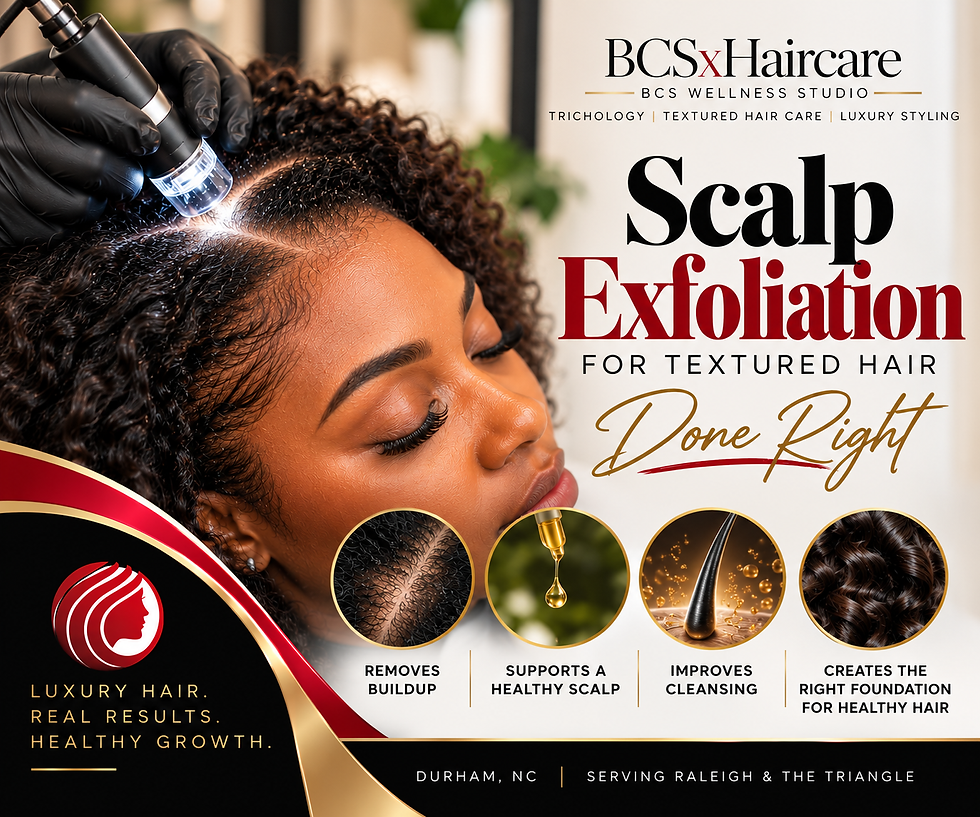
From there, care should be customized. That may include scalp-focused cleansing and exfoliation, hydration support, targeted treatments, protective styling adjustments, regular progress checks, and a realistic at-home regimen. The right plan depends on the cause of the concern. A client experiencing shedding after a major stressor needs a different approach than someone dealing with chronic tension around the hairline or repeated heat-related breakage.
The Difference Between Restoration and a Cosmetic Fix
Cosmetic services have a place. A silk press, a healthy trim, or a textured pixie transformation can be powerful confidence tools. The issue arises when style is used as the only response to a deeper problem.
A restoration-focused approach asks better questions. Is the hair breaking at the same point because of friction, chemical processing, heat, or a moisture-protein imbalance? Are thinning edges connected to tight braids, wigs, ponytails, or adhesive use? Is there increased shedding, or is the hair retaining less length because the ends are compromised? The answers shape the plan.
This distinction is especially important for textured hair. Curls and coils can make density changes less obvious until the condition has progressed. Hair may also be mistaken for "not growing" when it is growing from the scalp but breaking before it can retain length. Treating every concern with more oils, stronger hold products, or another protective style can delay real progress.
Restoration is more disciplined. It looks at the scalp environment, strand integrity, styling history, and maintenance habits together. It also respects timing. Healthy improvement is often visible in stages: less scalp discomfort, reduced breakage, better moisture retention, more manageable hair, then stronger length retention or fuller-looking areas over time.
Your Appointment Should Feel Personal, Not Prescribed
Premium care begins with being heard. If you have spent years buying products that promised growth, only to see more shedding in the shower, you should not be handed another generic routine. A specialist should explain what they see, what may be contributing to it, and what can reasonably change with consistent care.
At BCSxHaircare, the experience is designed around that level of individualized attention. Services combine textured-hair expertise with trichology-informed scalp care, so your appointment is not reduced to a style choice alone. The goal is visible beauty now while supporting healthier conditions for the hair that follows.
That does not mean every concern can be solved in the salon. Sudden, severe, patchy, or unexplained hair loss may require evaluation by a dermatologist or physician. The same is true for persistent itching, pain, scaling, sores, or signs of infection. A responsible restoration specialist knows when supportive salon care is appropriate and when a medical referral should be part of the plan.
What a Results-Driven Plan Can Address
The best treatment plan is specific enough to guide your next steps but flexible enough to respond to your progress. It should account for how often you wear your hair straight, curly, braided, cut short, colored, or covered. It should also fit your lifestyle. A regimen that requires an hour every night is not useful if you cannot realistically maintain it.
For thinning edges, the plan may focus on eliminating repeated tension, reducing friction, improving scalp care, and selecting lower-stress styling options while the area recovers. For breakage, the emphasis may shift to gentle cleansing, conditioning, trimming compromised ends, heat management, and adjusting how hair is detangled and protected between appointments.
For clients with stalled growth, the conversation often changes from growth to retention. Hair growth occurs at the scalp, but length becomes visible only when the strand can survive daily manipulation. That may mean fewer high-heat services, less overlapping chemical processing, more consistent conditioning, or a haircut that removes thin, damaged ends and makes the overall shape look fuller.
A scalp treatment can support these goals, but it is not a magic shortcut. Results depend on the underlying cause, consistency, and willingness to change the habits that created the stress in the first place. That honesty is part of a luxury service. You are investing in a plan with purpose, not being sold a promise no one can guarantee.
Why Styling Still Matters During Restoration
Many women worry that prioritizing restoration means giving up polished hair. It should not. The right style can protect your progress and restore your confidence while you work toward longer-term change.
A precision pixie can create the appearance of density, reduce manipulation, and remove heavily damaged areas. A carefully executed blowout or silk press can offer versatility when heat is managed thoughtfully and the hair is properly prepared. Even a protective style should be evaluated by its actual impact: Does it place pressure on the hairline? Does it allow for scalp access and cleansing? Does it stay in long enough to be convenient but not so long that buildup and matting become a problem?
There is no universally "best" style for thinning or fragile hair. What works depends on your density, scalp sensitivity, texture, daily routine, and the direction of your restoration plan. The priority is to choose beauty practices that do not ask your hair to sacrifice more than it can safely give.
How to Know You Are Ready for a Different Level of Care
You may be ready for specialized support if your hair concerns have become repetitive. Perhaps you keep trimming the same broken ends, notice more scalp showing in photos, avoid certain styles because your edges feel exposed, or feel anxious each wash day because of the shedding you see. These experiences deserve more than a product recommendation from a shelf.
Look for a provider who can clearly discuss textured hair, scalp health, and realistic expectations. Ask how progress is documented, how your plan will be adjusted, and what home care is essential between visits. Pay attention to whether the conversation centers only on selling a service or on understanding the pattern behind your concern.
Real restoration is not rushed. It is a series of informed decisions that make your hair easier to care for, stronger to style, and more aligned with how you want to feel when you see yourself. Start with an honest assessment, then give your hair the consistency it has been asking for.


Comments